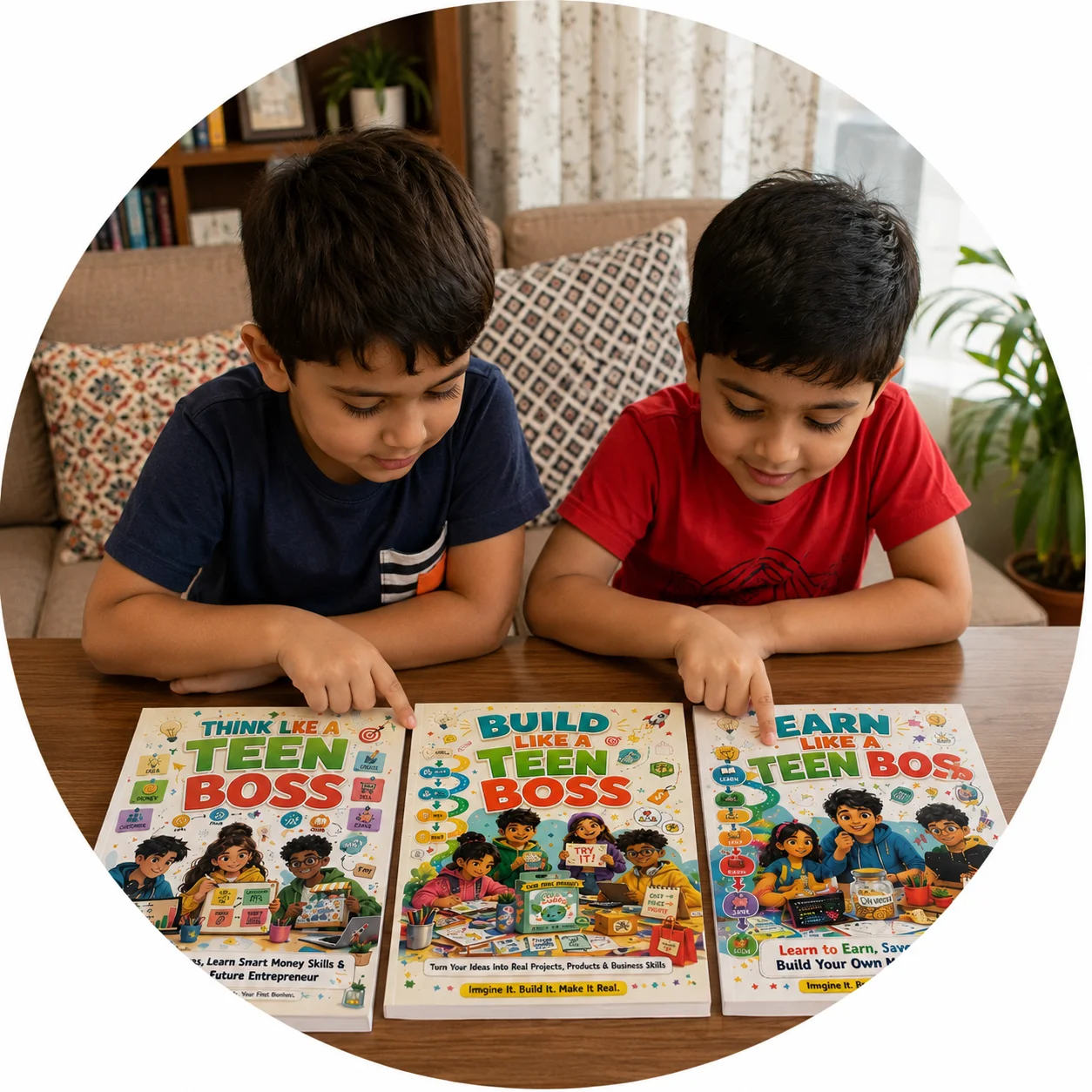
The Young Founder Series — Money, Ideas & Enterprise Workbooks for Ages 5–12
Free delivery across India Cash on Delivery available ₹200 off when you pay online All 3 workbooks · 230 pages Ages 5–12 Damage-free delivery promise
Ages 5–12 3 books · 230 pages · 200+ activities

School will teach your child almost everything.
Except money.

The Young Founder Series is three write-in workbooks that walk a child from “I have an idea” to “I earned my first ₹500.” Made for Indian children — in rupees, with UPI, with the OTP rule nobody ever sat them down and explained.

Printed & shipped from India No screen. No app. No subscription. Damage-free delivery promise
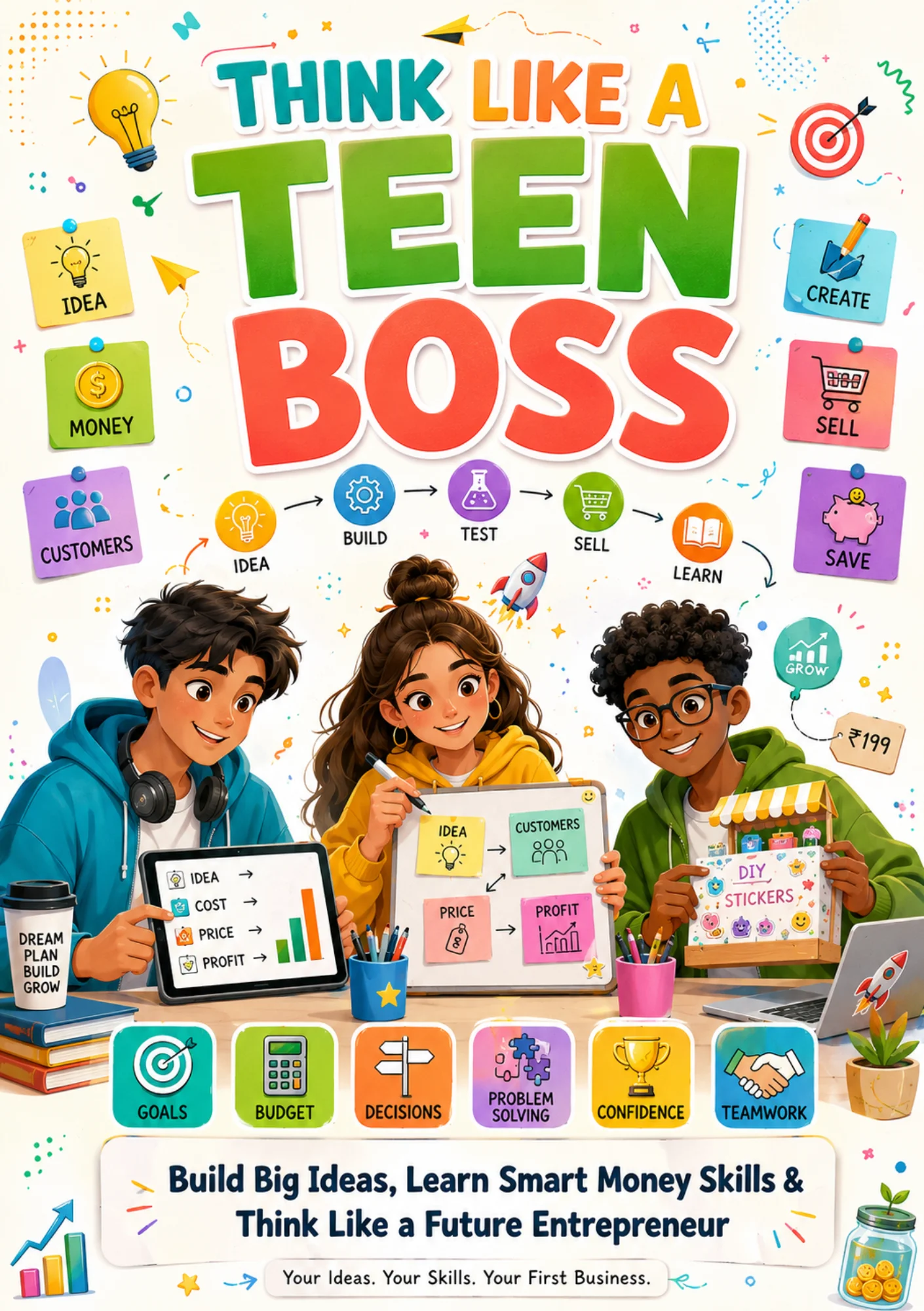
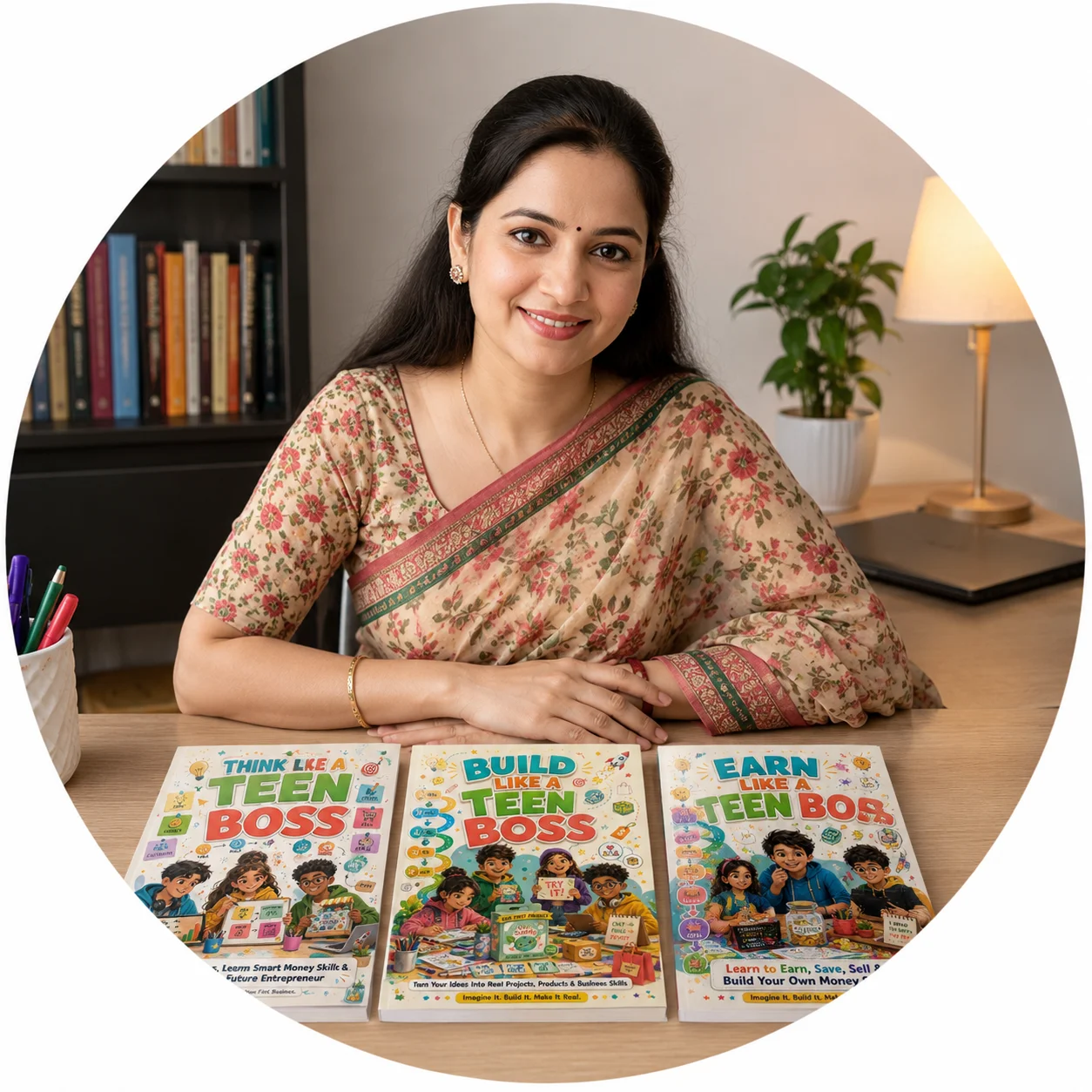
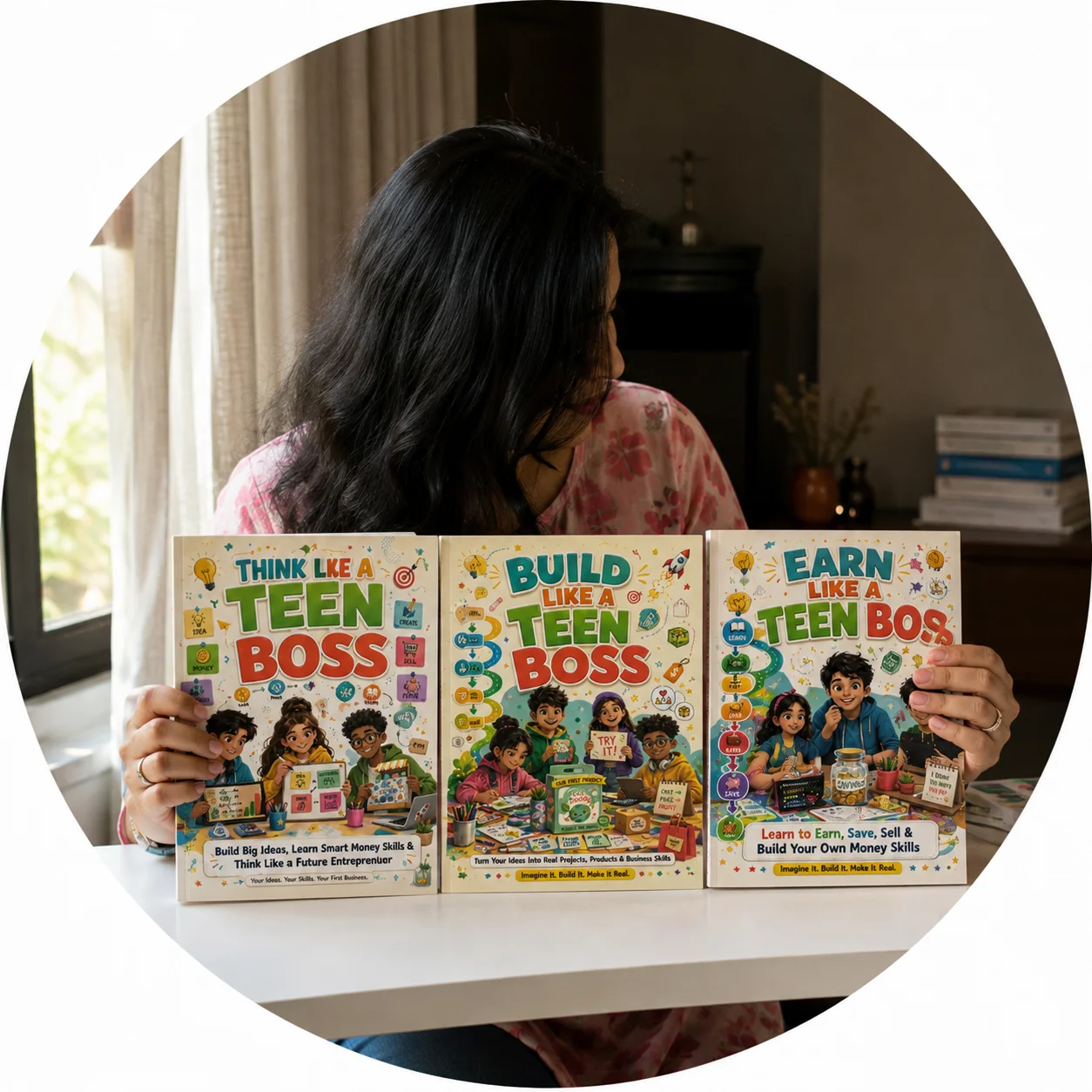
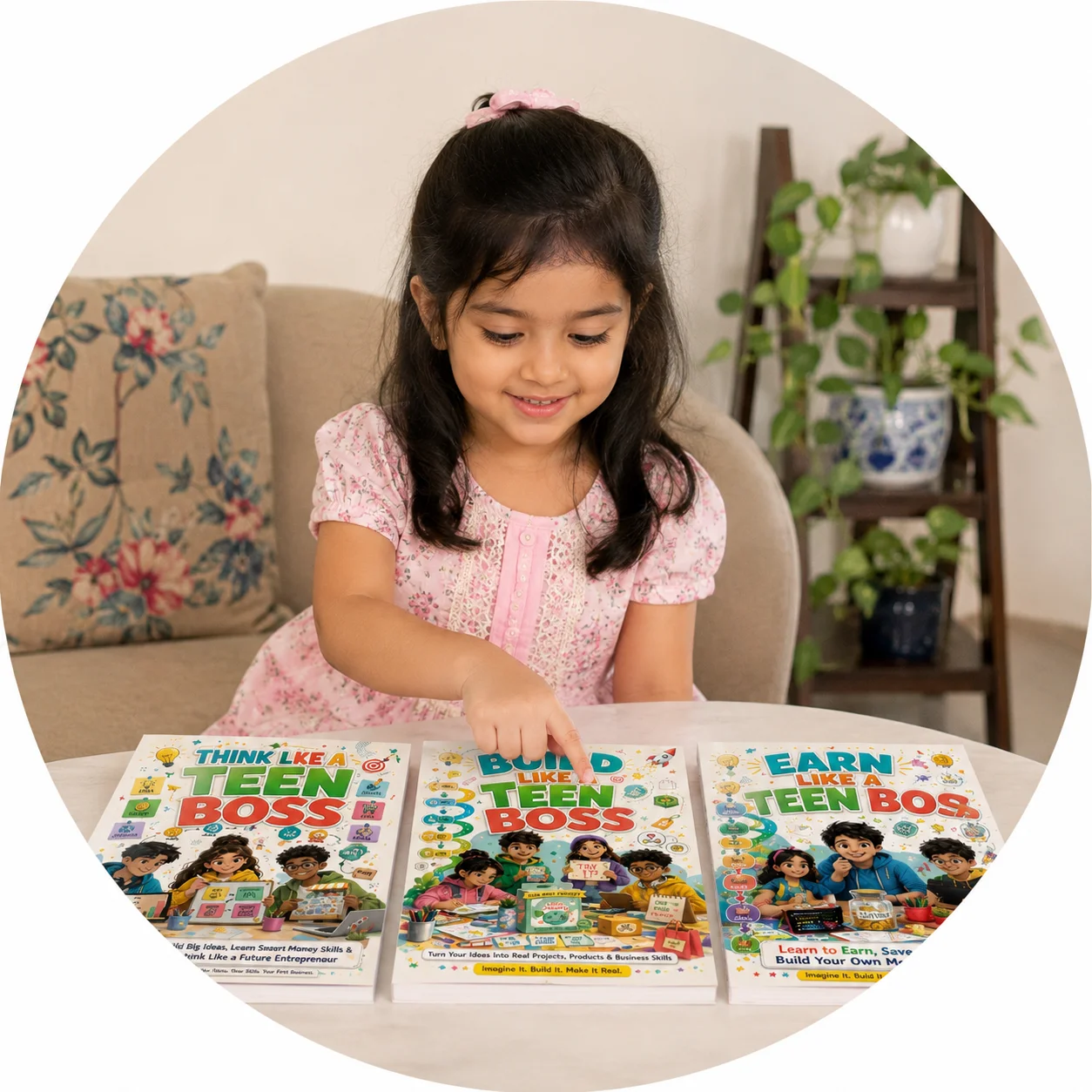
Think Like a Teen Boss — Book 1 cover
Book 1 · Think
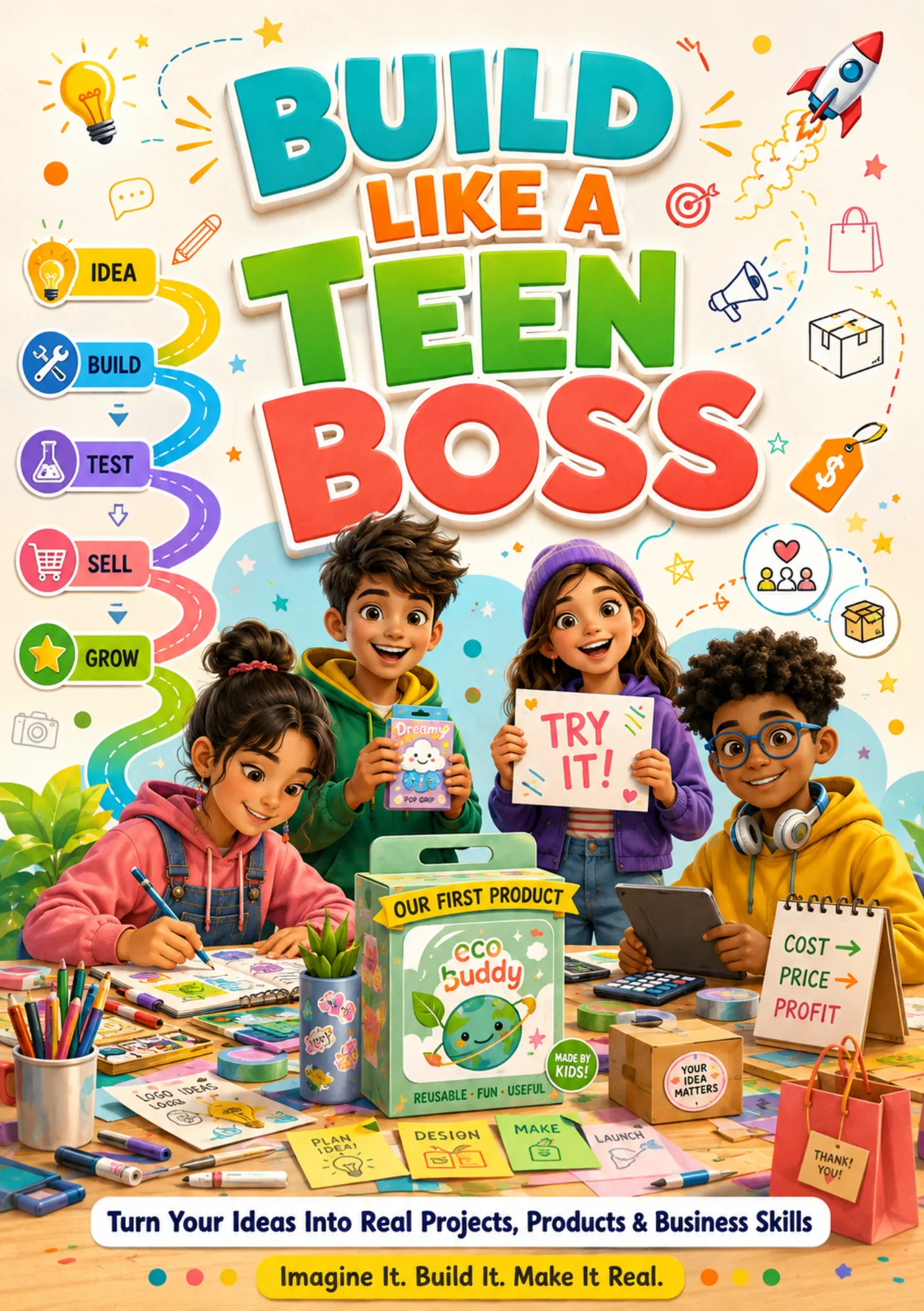
Build Like a Teen Boss — Book 2 cover
Book 2 · Build
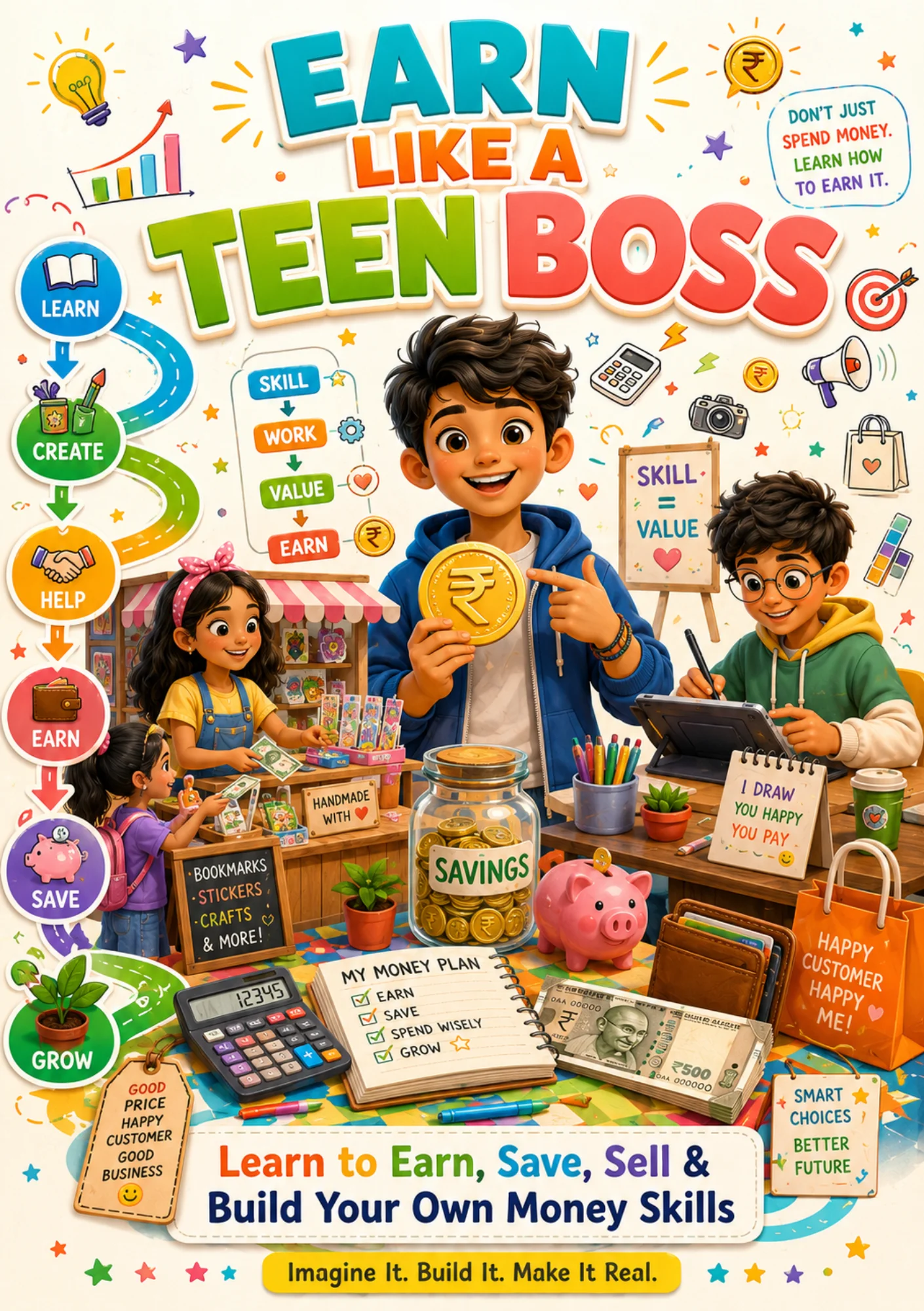
Earn Like a Teen Boss — Book 3 cover
Book 3 · Earn

3Workbooks · One set

The reason this book exists

Your child will handle money long before anyone teaches them how.

Somewhere around eight, a child starts watching you scan a QR code. Around twelve, they know where the UPI PIN is typed. By twenty-four, a salary lands in an account they were never taught to manage. In all those years, look at what actually gets taught.

Covered in school

  • Percentages, profit & loss sums
  • Interest formulas and word problems
  • Marks, ranks, exams

Not covered anywhere

  • The difference between what you want and what you can afford
  • Why you never read an OTP out loud
  • How to earn your first rupee instead of asking for it
  • What to do when your first idea doesn't work

A child who can solve a profit-and-loss sum on paper, but has never once decided what to do with ₹100 of their own, has learned arithmetic. Not money.

How the three books work together

One journey, split into three books.

Each book picks up exactly where the last one stopped. Your child finishes with a real idea, a real product, and real earnings they can point at.

1

Think

They learn to spot problems around them, come up with fifty ideas without fear, understand who a customer actually is, and pick one idea worth building.

2

Build

They make a first version with paper and glue, work out cost vs. price vs. profit, ask three people for honest feedback, then improve it.

3

Earn

They run a 14-day ₹500 challenge, split earnings into save, spend, give and grow, learn UPI safety, and write a money plan for the year ahead.

Ends with a signed certificate your child will actually keep

Open the box

Every single page is a page they write on.

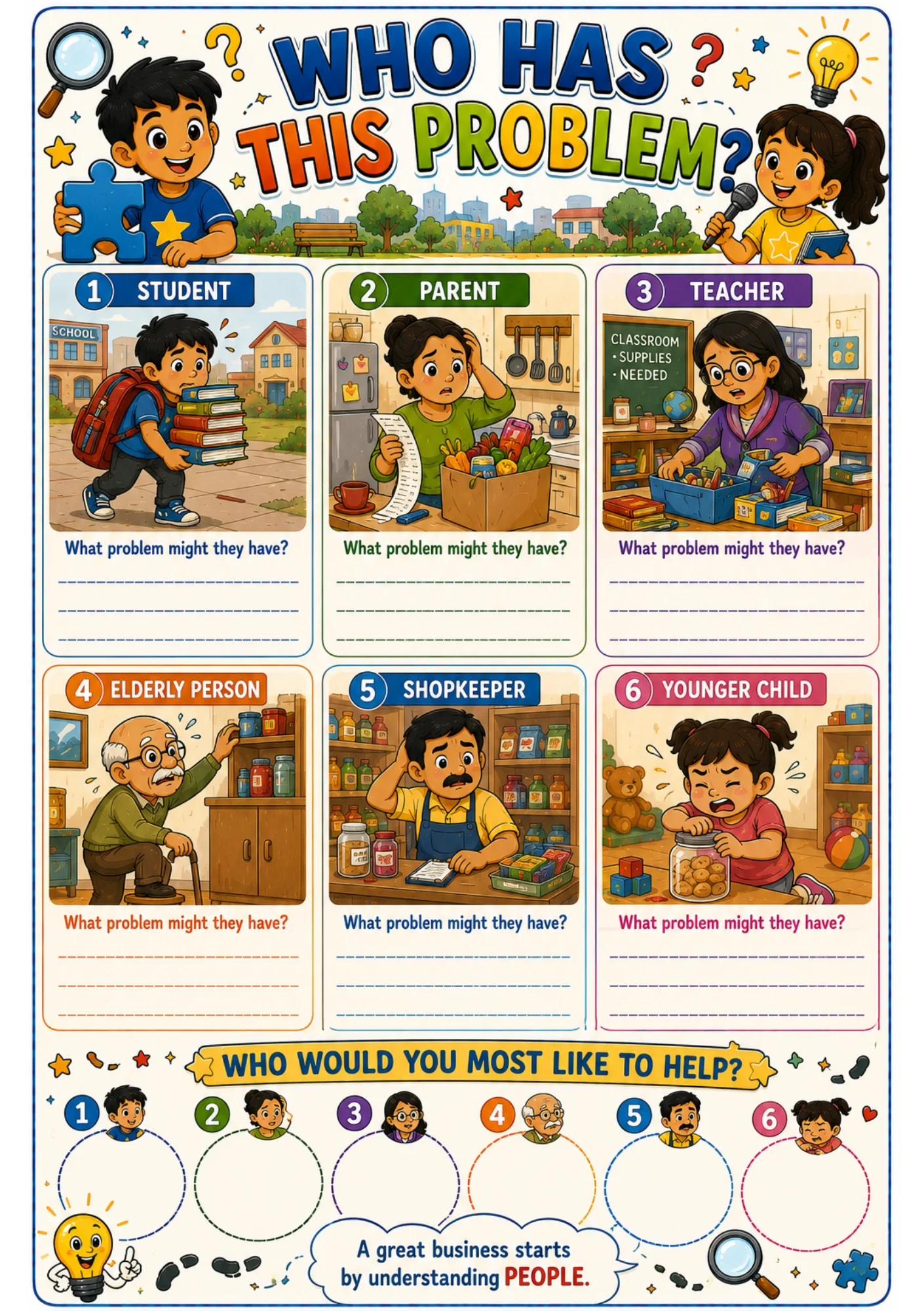
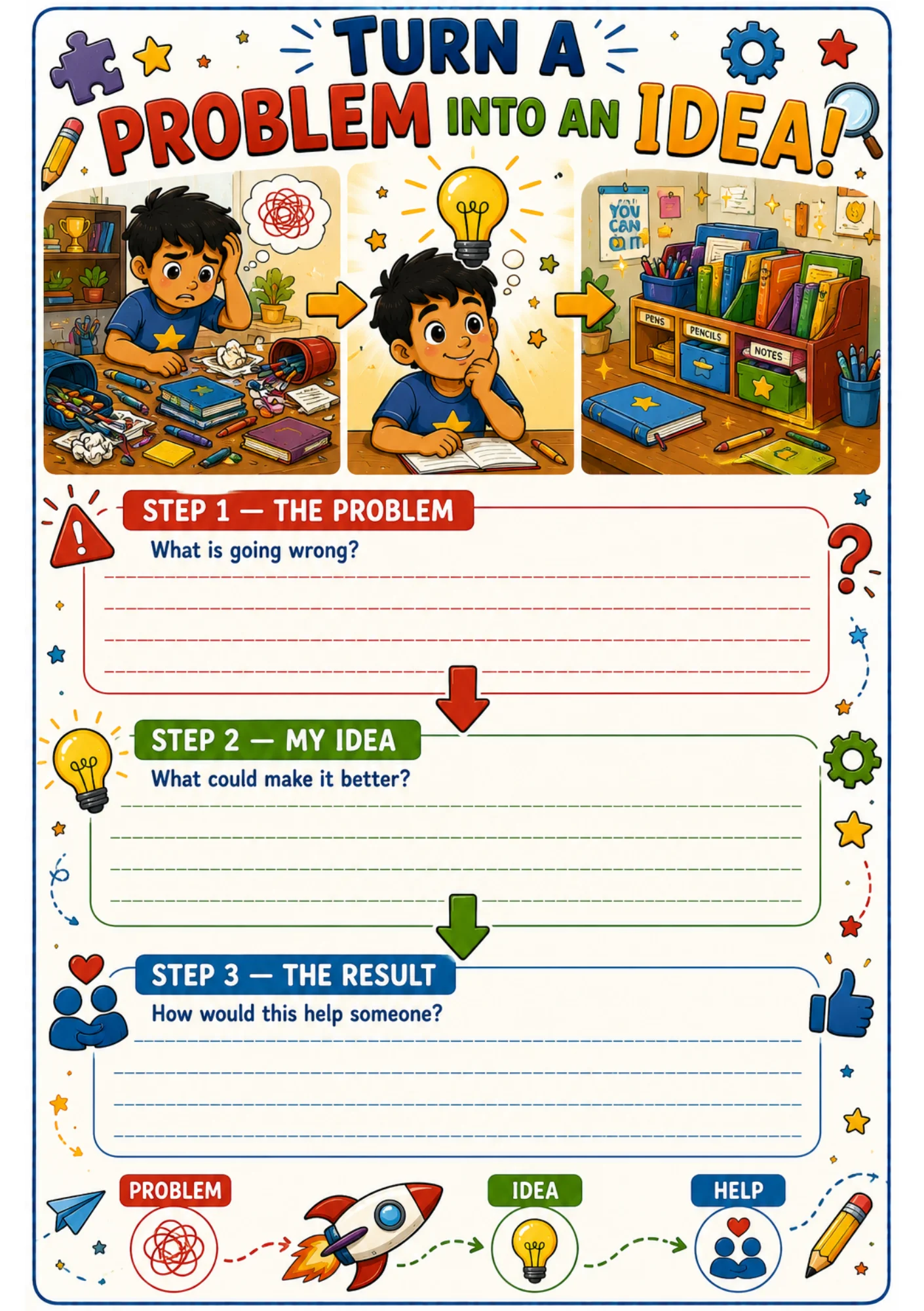
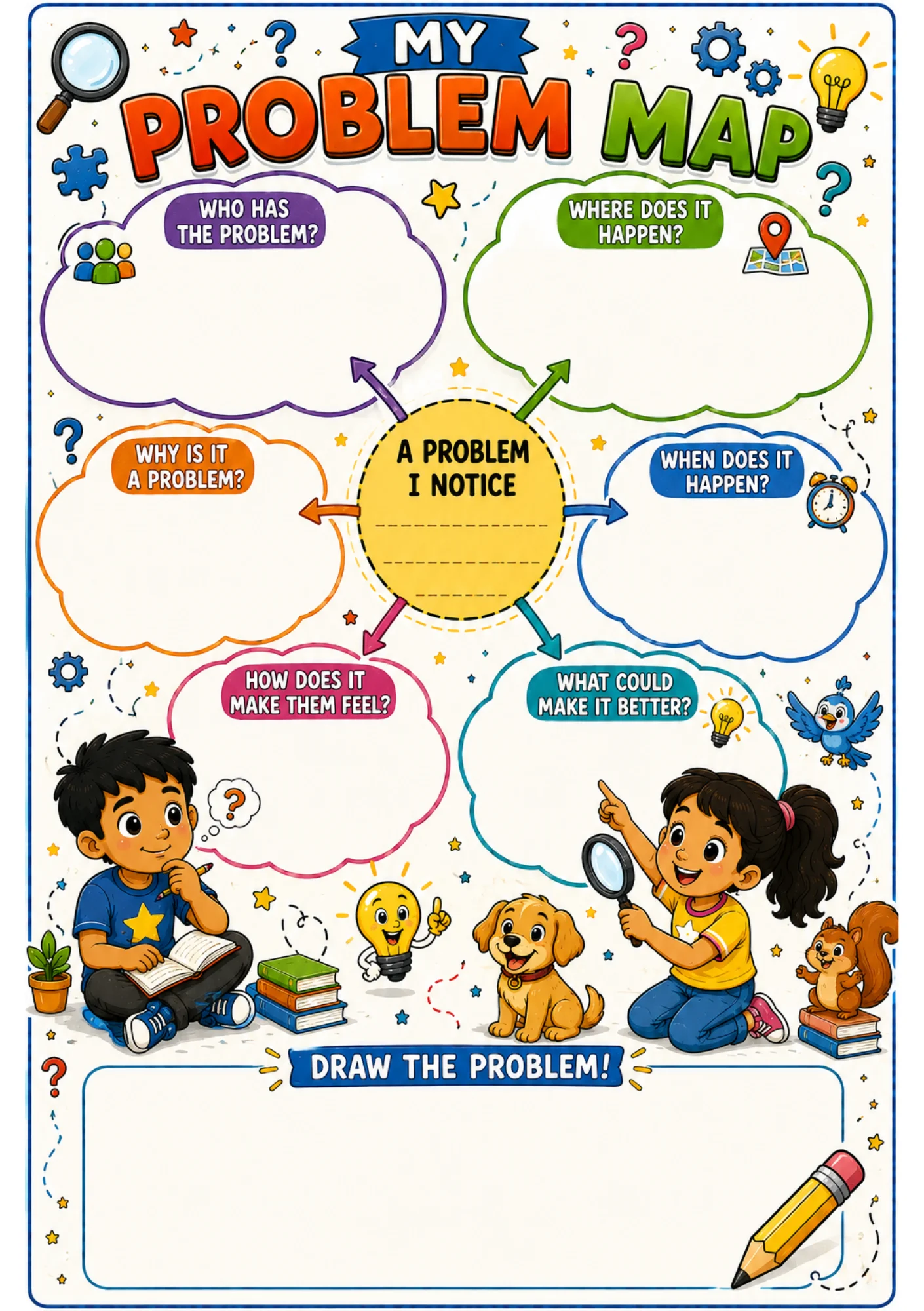
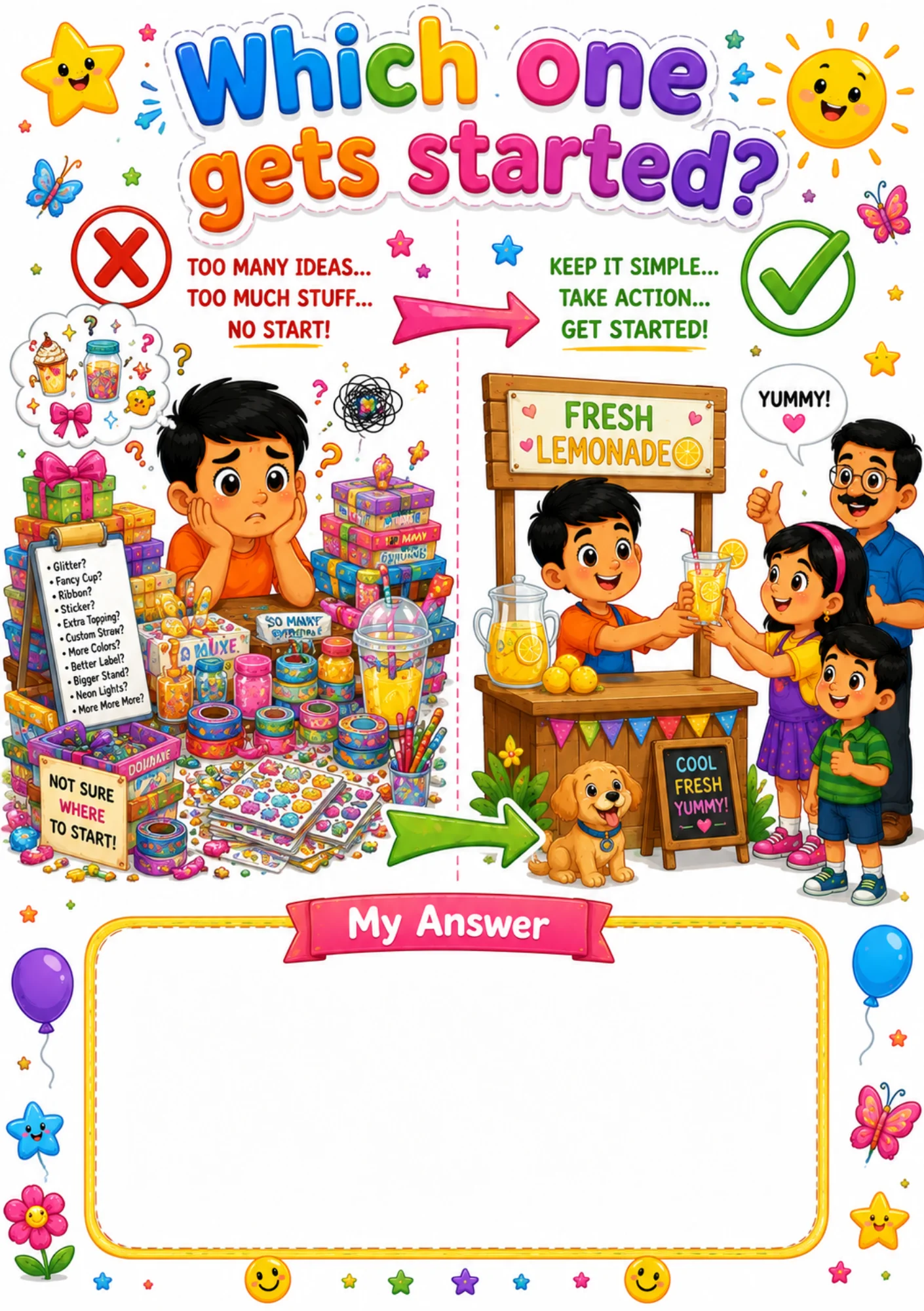
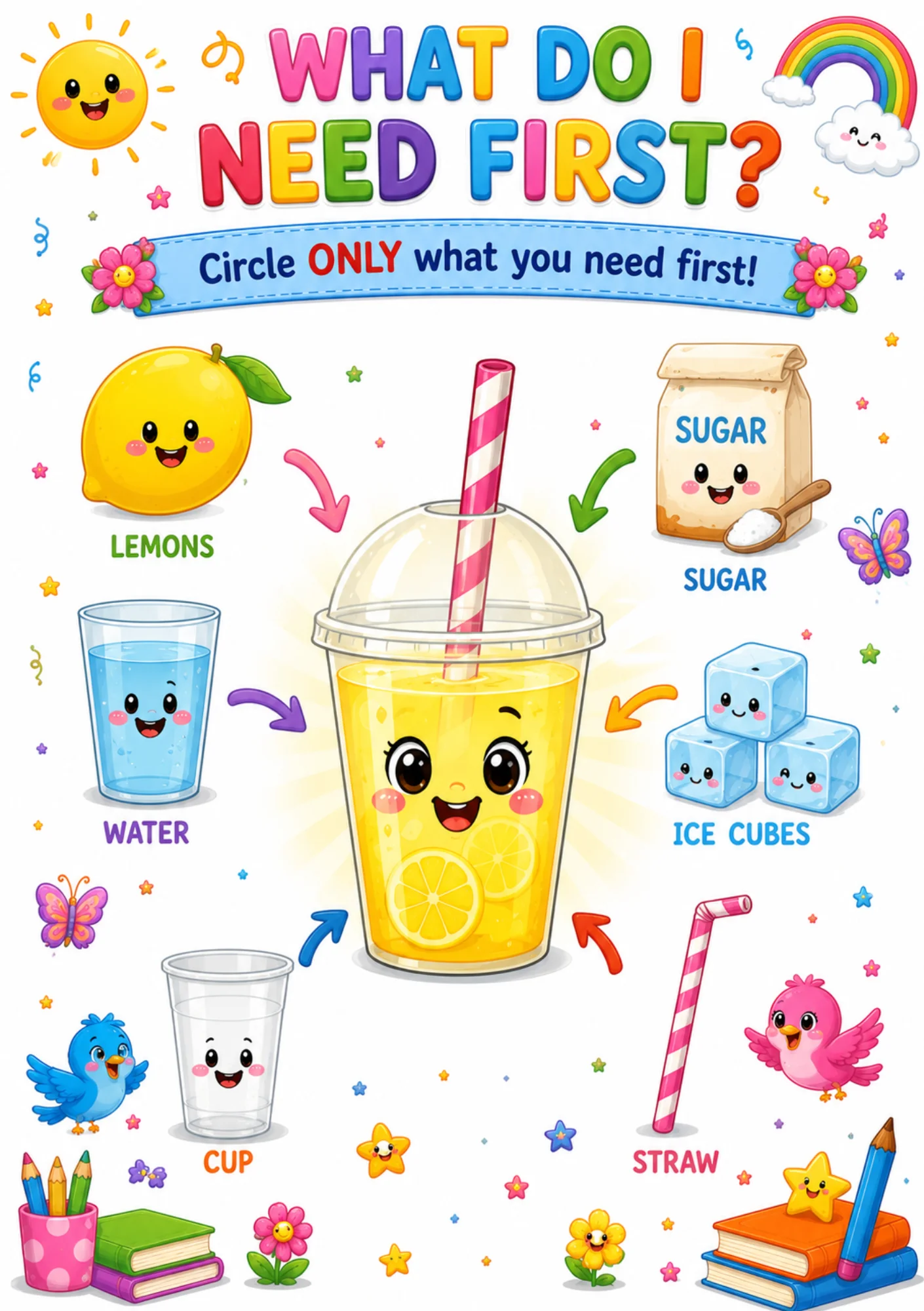
This is not a book that gets read once and shelved. There is a blank on every page — a box to fill, a choice to circle, a plan to draw. Below are real pages, exactly as they print. Tap any page to see it full size.

Think Like a Teen Boss — Book 1

Book One

Think Like a Teen Boss

69 pages Ideas & mindset Start here
  • “I can't do it” vs “I can't do it yet” — worked through in the child's own words, not a lecture
  • A skills inventory that shows them what they are already good at
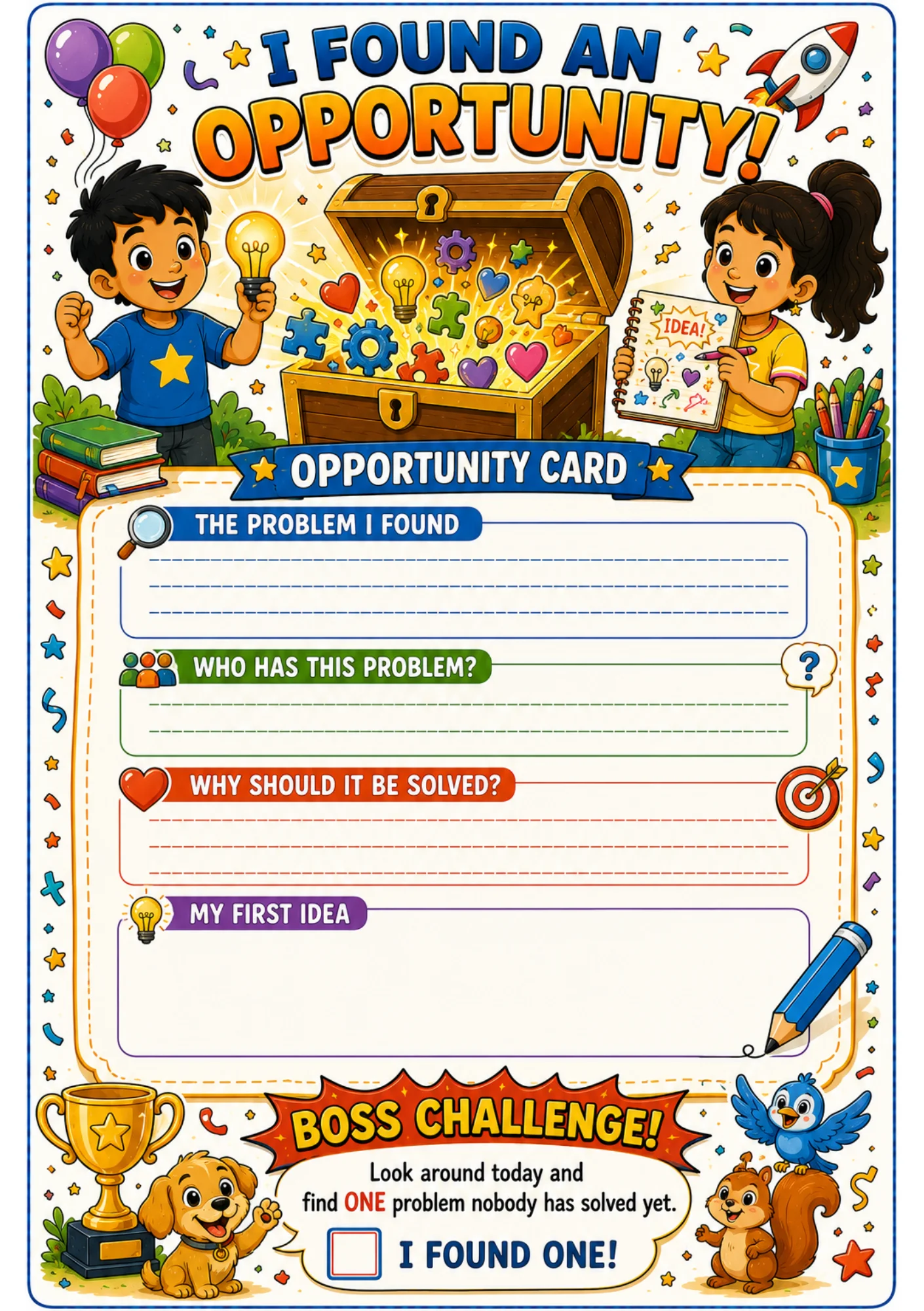
  • Problem-hunting at home, at school, in the neighbourhood
  • The 50-idea challenge, then a scorecard to pick the best one
  • Customer interviews, prototypes, feedback, and a one-page business plan
Sample page from Book 1
Sample
Sample page from Book 1
Sample
Sample page from Book 1
Sample
Sample page from Book 1
Sample
Build Like a Teen Boss — Book 2

Book Two

Build Like a Teen Boss

80 pages Product & first sale Hands-on
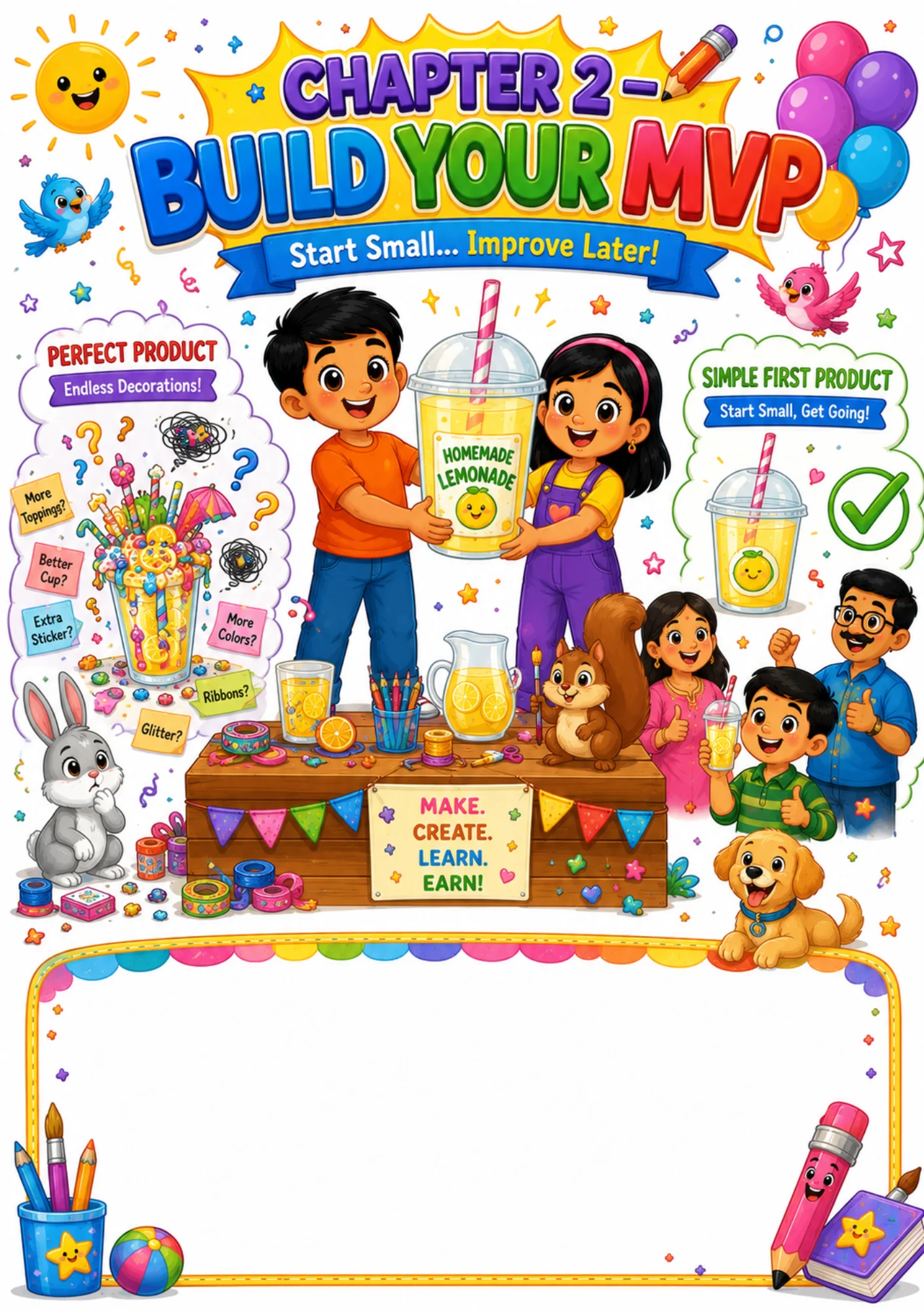
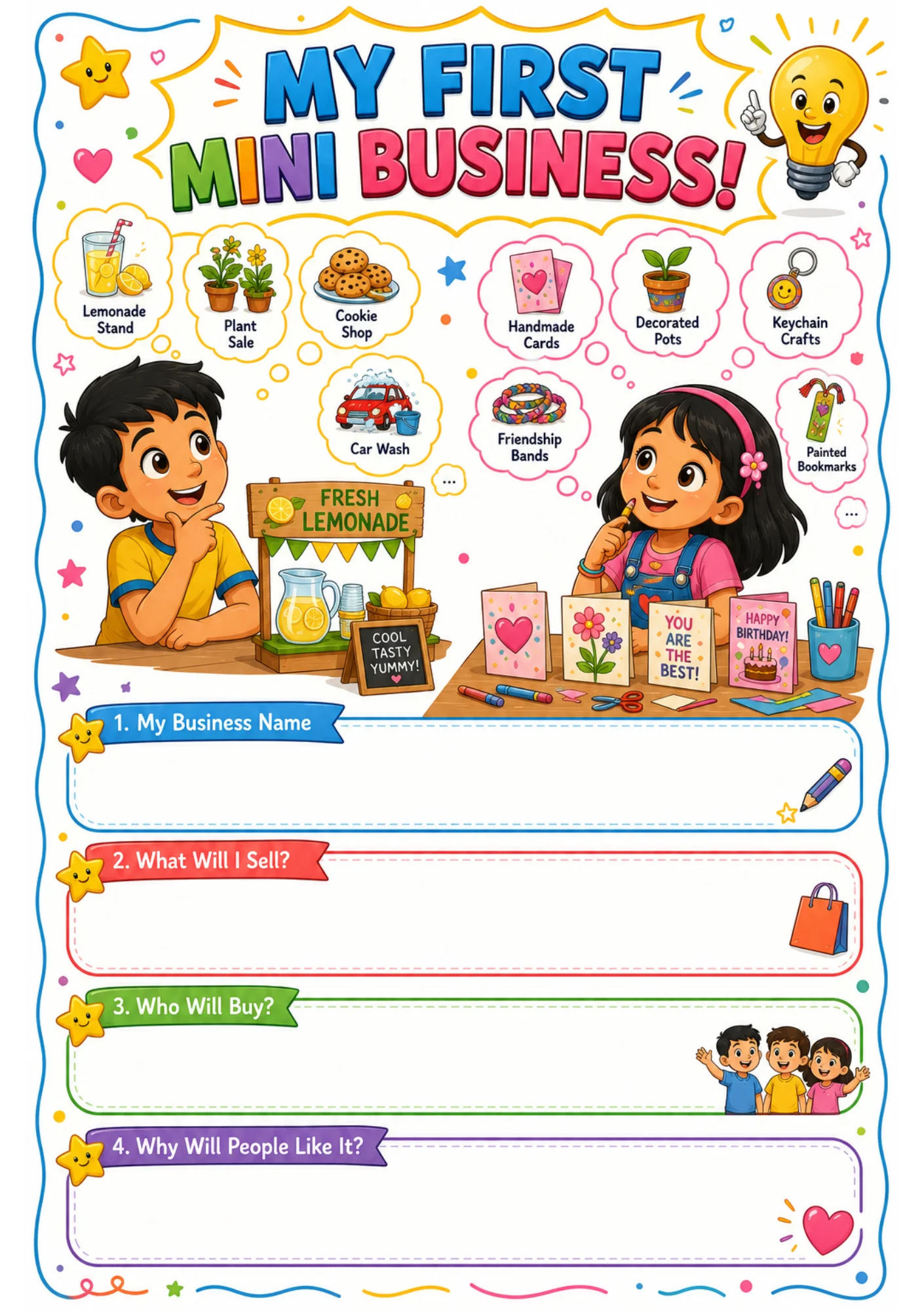
  • Choosing a first little business — bookmarks, greeting cards, plants, friendship bands
  • Cost → price → profit, taught with a lemonade stall a child can actually run
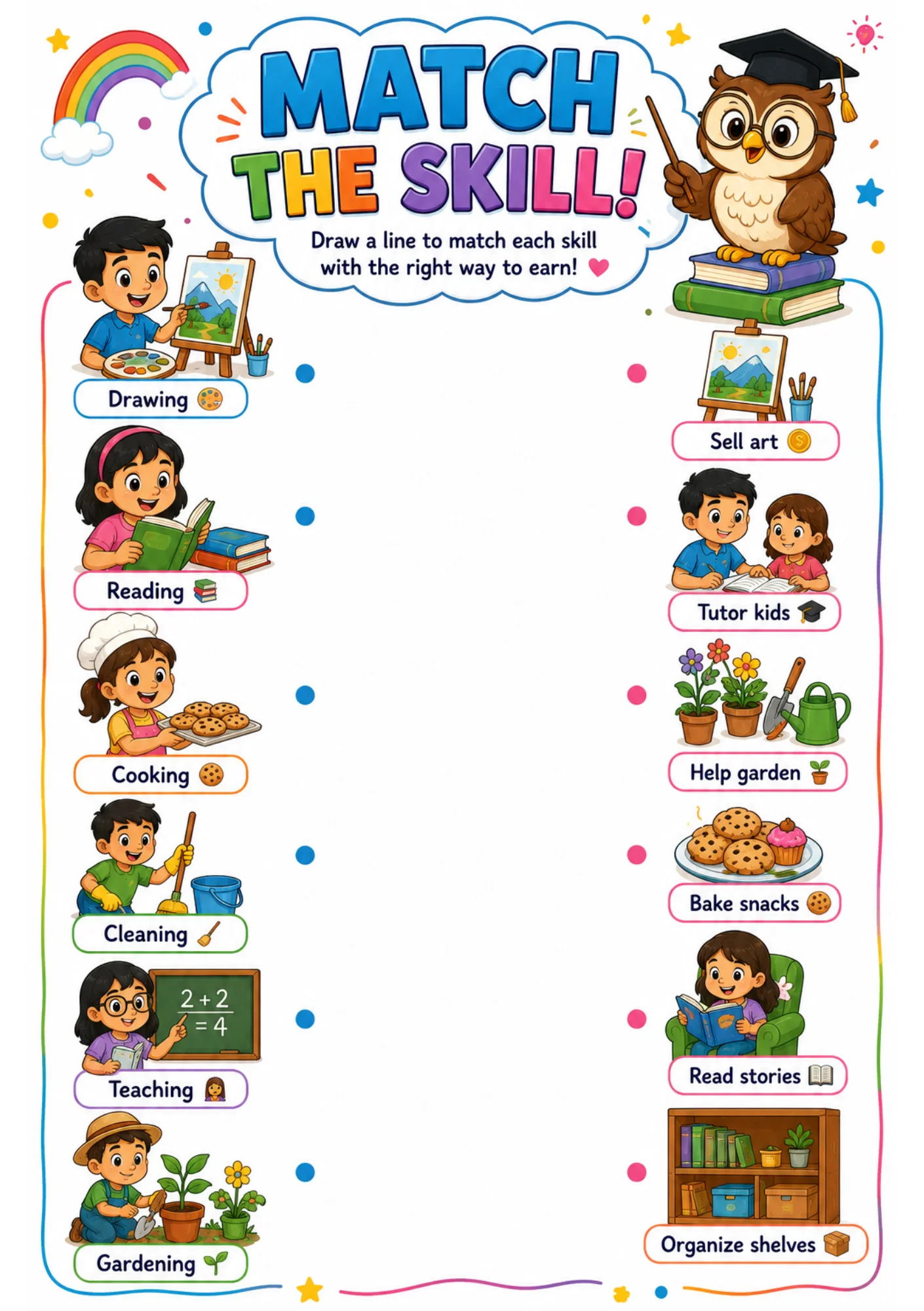
  • Who buys this? A matching exercise that builds real customer sense
  • Making the first sale politely — greeting, selling, giving change, saying thank you
  • What to do when it goes wrong, and a graduation page that celebrates trying
Sample page from Book 2
Sample
Sample page from Book 2
Sample
Sample page from Book 2
Sample
Sample page from Book 2
Sample
Earn Like a Teen Boss — Book 3

Book Three

Earn Like a Teen Boss

81 pages Money & UPI safety Parents' favourite
  • Where money came from — barter, shells, coins, notes, and now UPI
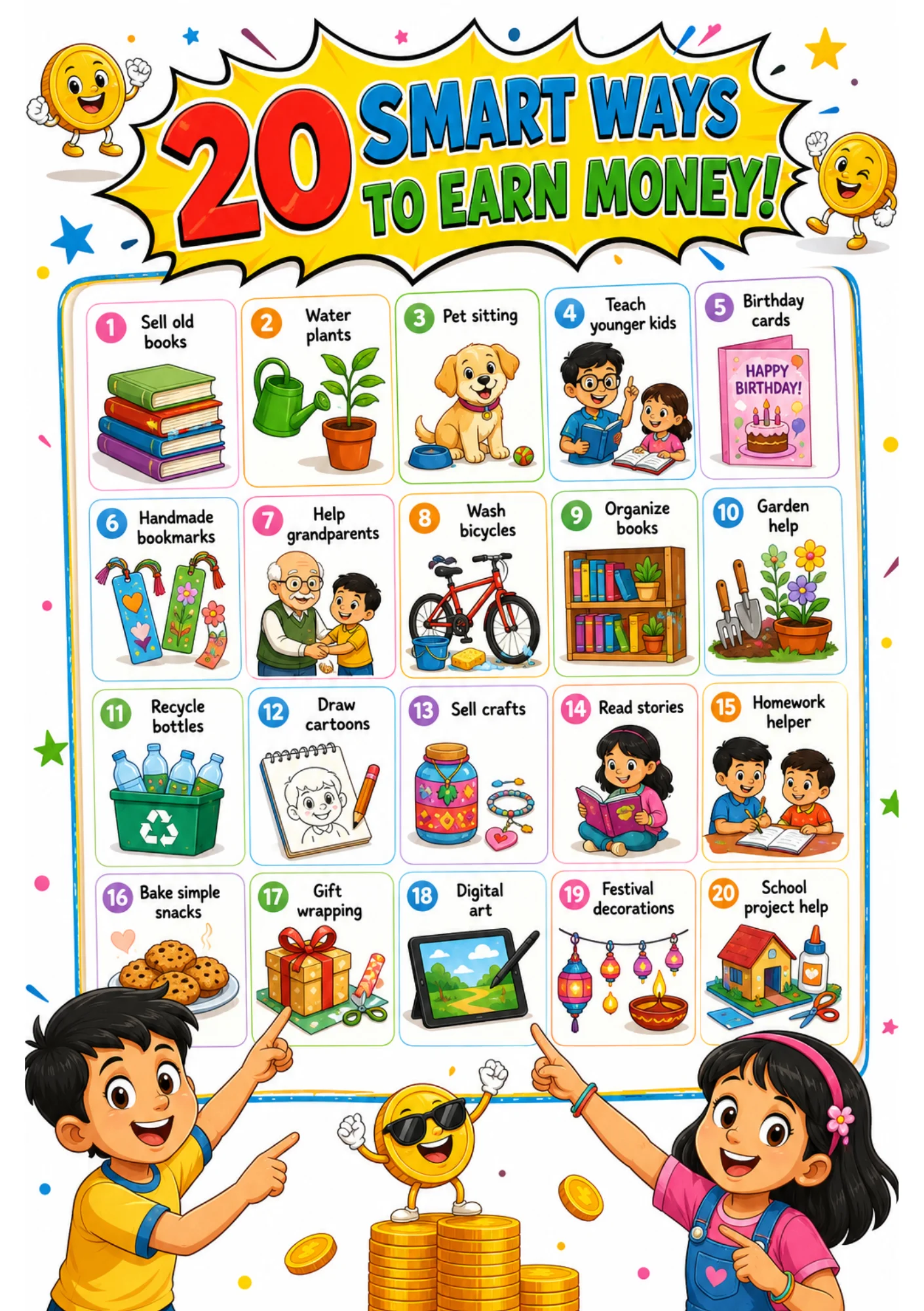
  • 20 honest ways a child can earn, plus a ₹100 challenge and a 14-day ₹500 goal
  • Needs vs. wants vs. wishes — the sorting exercise that ends pocket-money arguments
  • A first monthly budget: save, spend, give, dream — filled in by the child
  • Digital money safety: never share a PIN, never share an OTP, spot the fake link
Sample page from Book 3
Sample
Sample page from Book 3
Sample
Sample page from Book 3
Sample
Sample page from Book 3
Sample

Why imported activity books don't work here

Written in rupees. For the India your child is growing up in.

Most money books for children are printed for a child with a piggy bank of dollars and a Saturday lemonade stand. Your child watches you pay by scanning a code at the kirana shop. The two are not the same lesson.

Every number is a rupee

₹10, ₹20, ₹50, ₹100 notes on the page. A ₹500 goal that feels reachable, not abstract.

UPI

The payment they'll actually use

A full flow: parent's bank → phone → UPI → QR code → shopkeeper's bank. Drawn, then traced by the child.

OTP

Safety, not scare stories

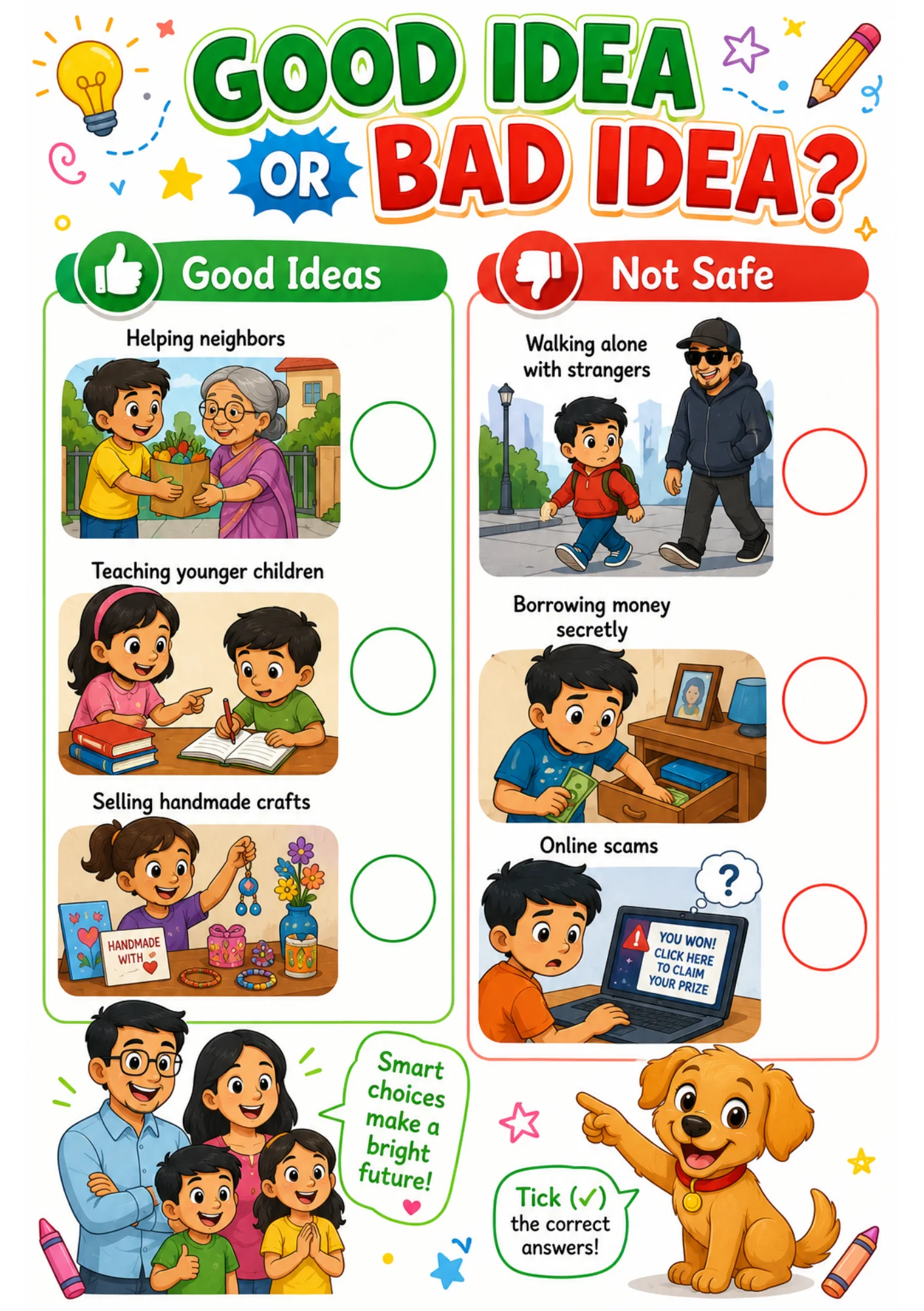
Safe scene or unsafe scene? Fake link, unknown call, fake prize — sorted by the child, so the rule sticks.

₹₹

Familiar streets

Kirana counters, weekly bazaars, festival stalls, Indian families. Your child sees themselves on the page.

3Workbooks
230Printed pages
200+Write-in activities
5–12Years

After the last page

What your child can do that they couldn't before.

  • Look at something annoying and say “this is a problem I could fix”
  • Explain what a customer is, and why the customer decides the price
  • Work out cost, price and profit on a small sale — without help
  • Split their own money into save, spend, give and grow
  • Say no to an OTP request, even from someone who sounds official
  • Ask for feedback and change something instead of giving up on it
  • Set a savings goal in rupees and track it week by week
  • Talk to you about money like a person, not a request

From parents who bought it

What changed at home after the books arrived.

Nandini KulkarniPune, Maharashtra
★★★★★

I bought this because I wanted my daughter to learn something beyond school subjects — money especially. What surprised me is how fast she connected it to real life. Now she asks “why would someone buy this?” and “how much would it cost to make?” We ended up discussing pricing while shopping.

Verified buyer
Richa BansalJaipur, Rajasthan
★★★★★

My 11-year-old usually loses interest in books that feel instructional, but this one kept him going because everything is visual and practical. Earlier money was only about spending. Now he talks about saving, and whether something is even worth buying. He's started writing business ideas in his notebook.

Verified buyer
Meenal IyerBengaluru, Karnataka
★★★★★

What I liked most is that it teaches children to look at problems differently. My daughter had an idea for customised bookmarks and actually made a few herself. Then she worked out material cost, selling price, and who her customers could be. Watching her go from “I have an idea” to “how do I make this work?” was lovely.

Verified buyer
Ayesha MerchantAhmedabad, Gujarat
★★★★★

We spend so much time on academics, but money management and decision-making matter just as much. This puts those ideas in a form children actually understand. My son loved the building and selling parts. After finishing, he explained to us why a product has to solve a real problem before anyone will buy it.

Verified buyer
Shreya MenonKochi, Kerala
★★★★★

My son is creative but hesitates to explain his ideas — he worries they aren't good enough. Going through this, he got far more comfortable talking about them and asking for feedback. I won't say it turned him into an entrepreneur overnight, that would be unrealistic. But he's much more confident about trying.

Verified buyer
Pallavi DeshpandeNagpur, Maharashtra
★★★★★

I wanted something that introduced money and enterprise without feeling like another textbook, and this fit perfectly. My daughter liked the illustrations, but I appreciated the message more — earn through useful skills, understand people, manage money wisely. She's more careful with her pocket money now.

Verified buyer

Order the set

Two ways to pay. One of them saves you ₹200.

All three workbooks ship together as one set. Free delivery anywhere in India.

Cash on delivery

₹99 to book it now

Pay the rest when it reaches your door

Booking amount (online)₹99
Balance on delivery (cash)₹999
Total you pay₹1,098
  • All 3 workbooks, 230 pages
  • Free delivery across India
  • See the books before paying the balance
  • Damage-free delivery promise
Book my set for ₹99 ₹999 PAYABLE ON DELIVERY

Booking amount is adjusted against your total.

₹200 off on prepaid

Pay online · Best value

₹899 ₹1,099

Everything paid. Nothing at the door.

Set price₹1,099
Prepaid discount− ₹200
Total you pay₹899
  • All 3 workbooks, 230 pages
  • ₹200 cheaper than cash on delivery
  • Priority packing & dispatch
  • Free delivery · Damage-free promise
Save ₹200 Pay ₹899 online FREE DELIVERY · DISPATCHED FIRST

UPI · Cards · Net banking · Wallets

If it arrives damaged, we replace it. Every set is checked and wrapped before dispatch. If a book reaches you torn, marked or with pages missing, send us one photo within 7 days and a fresh set goes out at our cost.

Before you order

Questions parents ask.

What age is this actually right for?

Five to twelve. Children between 5 and 7 do the colouring, circling, matching and drawing pages happily on their own, and enjoy the money pages sitting next to a parent. From about 8 upwards they work through most of it independently, including the pricing, budgeting and ₹500 challenge pages. Nothing is wasted at either end — a younger child simply grows into the later pages over the next couple of years.

My child is 5. Won't the business parts be too hard?

The heavier pages sit in the last third of Book Three. Everything before that is built around sorting, choosing, drawing and counting — things a 5-year-old already does. Treat it as a two-year book rather than a two-month one: start at the front, go at their pace, and come back to the budgeting pages when they're ready. Most parents do 2–3 pages at a sitting.

Is it in English or Hindi?

English, with short sentences and heavy illustration support — most pages can be understood from the pictures alone. All the money examples are in rupees and Indian settings, so a child in an English-medium or semi-English school will follow it comfortably.

Does my child write inside the book?

Yes — that is the whole point. There are blanks, boxes, checklists and drawing frames on almost every page. It is a workbook, not a storybook. If you have two children, order two sets so neither has to share.

How long does the set last?

At two to four pages a sitting, roughly two to three months for an older child, and considerably longer for a younger one. There is no timetable. The 14-day ₹500 challenge in Book Three is usually the part children rush to finish.

What is the difference between the ₹99 option and the ₹899 option?

The ₹99 option books your set now; you pay the remaining ₹999 in cash when it is delivered, for a total of ₹1,098. The ₹899 option is paid fully online today, which saves you ₹200 and gets your parcel packed and dispatched first. The books are identical either way.

How soon will it reach me?

Orders are dispatched within 1–2 working days. Delivery usually takes 3–7 working days depending on your pin code. You'll get tracking details by SMS and WhatsApp once it ships.

Is this school homework in disguise?

No. There are no marks, no answers to memorise and no tests. Every page asks the child what they think, then gives them something to do with it. Most children treat it as an activity book they happen to be learning from.
The Young Founder Series

One day they'll earn. Start the lesson now.

Three workbooks. 230 pages your child fills in themselves. Delivered to your door anywhere in India.